
Not so many years ago, following sports was mostly about emotions. You relied on intuition, experience and maybe a little gut feeling when discussing who was going to win a match. Today, it looks different. Supporters sit with their phones in their hands, scroll through statistics, compare form curves and try to read the game before it happens.
What has changed? In short: apps.
From gut feeling to pattern recognition
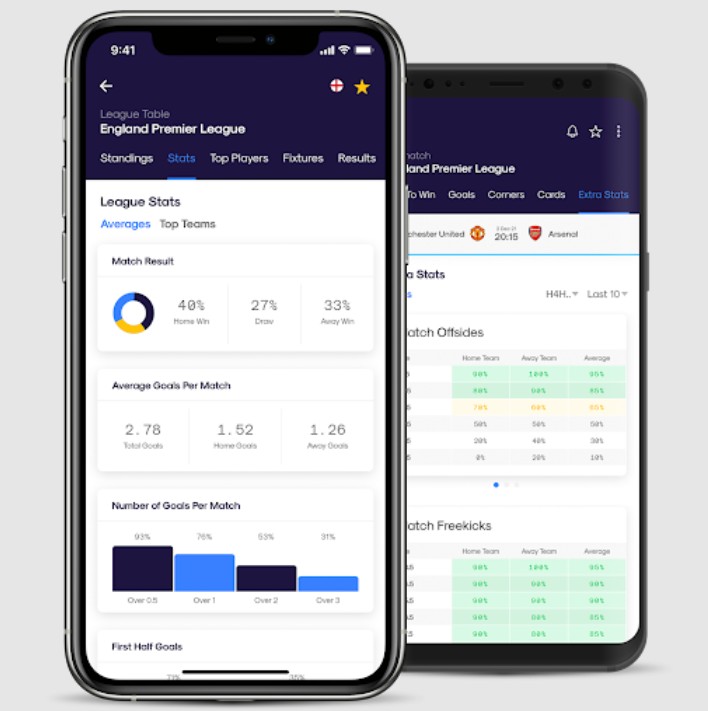
Modern sports apps are doing something interesting with how we experience match days. They don’t just give us results – they give us coherence. Suddenly, you can see how a team performs at home versus away, how often they score in the last quarter, or which players create the most chances.
That doesn’t mean that the feelings disappear. Rather, they get a new team. When you cheer on your team, you do it now with a little more insight in mind. Maybe you know that the team often turns games around late. Maybe you know that your opponent struggles against high pressure.
That kind of knowledge affects how you think – and how you predict.
What kind of data do fans actually use?
Most apps offer more than just basic statistics. But it’s not necessarily the amount of data that makes the difference – it’s how it’s presented.
Typical features include:
- Form curves – how the team has performed in recent games
- Head-to-head stats – historic showdowns between the teams
- Player data – goals, assists, xG (expected goals)
- Live Analysis – Ball Possession, Shots, Pressure Intensity
When all of this is gathered in one overview, it becomes easier to see patterns. And it is precisely patterns that form the basis for better assessments.
In this context, it is interesting how some users also compare different digital platforms, including guides that mention the best online casino in Norway, not necessarily for games per se, but to understand how odds, probability and risk assessment are presented in a more structured way.
The silent revolution in the supporter role

The supporter today is not just a spectator. It’s an analyst in miniature.
During a regular game, a discussion can quickly evolve from “he’s playing poorly today” to “he’s actually having fewer progressive runs than usual”. It may sound nerdy, but it says something about how the understanding of sports has evolved.
It’s not about becoming an expert. It’s about seeing more.
And maybe also about asking better questions:
- Why does the team create fewer chances in the second half?
- Why does this player score the most away from home?
- What actually happens when a team changes formation?
Smarter predictions – but not perfect
It’s tempting to think that more data automatically gives the right answers. But sports are still unpredictable. That’s part of the charm. What apps do is not remove the uncertainty – but to make it more understandable. You can see probabilities. You can identify trends. But you can never know for sure what will happen when the referee blows the whistle for the game. And perhaps it is precisely the balance that makes it interesting. Between what we know – and what we can only guess.
How to use apps smartly
It’s easy to get overwhelmed by all the information. Therefore, there are some simple principles that often work better than trying to read everything:
1. Focus on a few key indicators
Not everything is equally important. Form, shot statistics, and defensive numbers often provide more value than random data points.
2. Look for consistency
A single match says little. Five or six games can start to show a pattern.
3. Combine data with context
Damage, travel congestion, and weather conditions aren’t always clearly visible in the apps—but they do affect the bottom line.
4. Don’t ignore what you see with your own eyes
Data is useful, but it’s still only one part of the picture.
When technology makes the sport more engaging
An interesting side effect of all these apps is how they change the very experience of watching sports.
A match is no longer just 90 minutes of play. There is a continuous stream of information before, during and after the match. You follow developments, adjust your expectations and discuss with others – often in real time.
It also means that smaller matches can be more interesting. When you have access to insights and statistics, even a match between two mediocre teams can feel more engaging because you understand what’s at stake.
A more reflective way to follow sports
Ultimately, this is not just about “betting correctly”. It’s about understanding the game better. When fans use apps consciously, something happens to the way they watch sports. They become more attentive to details. They see connections they previously overlooked. And they may gain a deeper respect for how complex the game really is. Is it necessary to enjoy sports? Absolutely not. But for many, it makes the experience richer.
Final thoughts
Sports will always contain an element of chaos. A mispass, an unexpected goal, a moment of individual brilliance – these are things that cannot be fully predicted. But with the help of modern apps, we can get a little closer to understanding. Not because we want to remove the uncertainty. But because we want to navigate it with a little more insight. And perhaps it is precisely there, in the span between data and emotions, that the modern supporter experience really lives.
Smarter sports predictions with modern apps