
European top-flight football has always been about details. Small adjustments in positioning, tempo or pressure can decide matches at the highest level. Over the past few seasons, one pattern has become clearer than before. The best teams don’t win because they follow one fixed idea, but because they can change their plan while the game is in progress.
This development is about more than formations on the board. It mirrors how coaches read the game, how players make decisions under pressure, and how analytics are used before and during matches. Just like in other complex systems where adaptation gives an advantage, whether it is for sports or online entertainment such as casino Spill Norge, the ability to react quickly to new situations is rewarded.
What is meant by tactical flexibility
Tactical flexibility describes a team’s ability to shift structure, roles, and style of play without losing balance. In practice, this means that the team can start in one formation, defend in another, and attack in a third. Many top clubs move seamlessly between 3-2-5 in attack and 5-4-1 without the ball.
This requires players with a high level of game understanding. Full-backs go into midfield. Centre-backs step up in the build-up. Wingers fill inner spaces. The changes often take place without a signal from the sidelines, guided by clear principles that are incorporated on the training field.
Why flexibility has become crucial
The match load in European football has increased markedly. Top clubs often play 55 to 60 games per season. At the same time, the analysis of opponents has become more precise. A predictable team is quickly revealed.
Several factors have pushed forward this development:
- A tight match schedule makes it necessary to vary the intensity and structure
- Detailed match analysis reveals fixed patterns faster than before
- New tournament formats in European cups leave less room for error
Coaches who can adjust the pressure height, build form and risk along the way get a clear advantage. Flexibility has become an insurance against both tactical and physical challenges.
Examples from Europe’s top clubs
Real Madrid have shown in recent seasons how balance and freedom can be combined. The team alternates between controlled possession and direct conversions. Midfielders such as Jude Bellingham and Federico Valverde switch roles depending on the match picture, making the structure difficult to read.
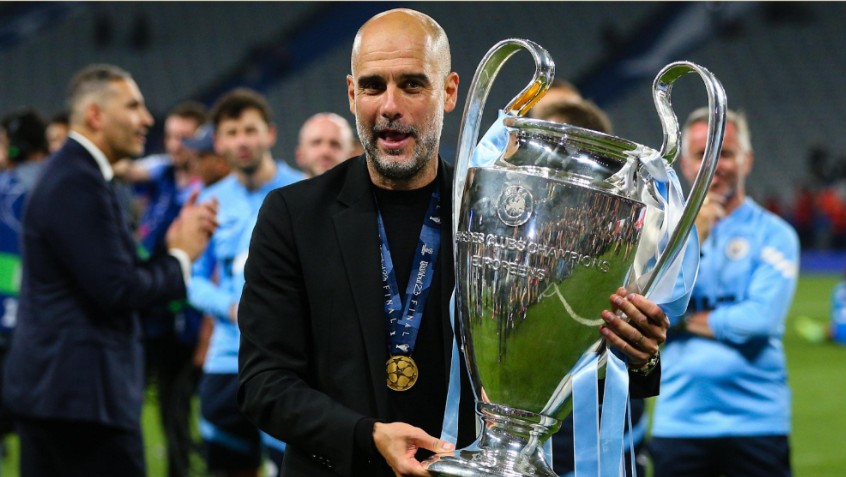
Manchester City under Pep Guardiola is perhaps the clearest example of structured flexibility. In attack, the team is often formed in a 2-3-5, where the full-backs move in centrally. Without the ball, the team quickly falls into a compact 4-4-2-like block. Small adjustments in the direction of pressure determine where the match is played.
Inter with Simone Inzaghi shows a different variant. The starting point is 3-5-2, but the team adjusts width and depth continuously. The height of the wingbacks determines whether the team presses high or protects their own box. It provides security in defensive phases without sacrificing attacking power.
Common characteristics of flexible teams
Although the styles vary, the most adaptable teams share several traits. These elements recur in game after game and form the basis for stable performance.
- Clear principles instead of fixed positions
- Quick transition between pressure and low block
- Players who master multiple roles
- Structured use of match data
These factors make changes feel natural to the players. Flexibility becomes part of the identity, not an emergency measure.
Real-time analysis and decision-making
Modern coaching teams work closely with analysts. Figures for pressure intensity, running patterns and direction of passing are updated continuously. During combat, small cues can lead to adjustments in structure.
This is not about overriding the players. The goal is to give them a better basis for decision-making. When everyone knows the framework, improvisation can take place without the team losing shape.
What this means for game quality
For the audience, tactical flexibility makes for richer battles. Match images change more often. Momentum changes faster. It becomes more difficult to predict the development after the first goal.
For the teams, it means greater control over risk. The best teams choose when to dominate and when to protect themselves. That ability now separates Europe’s top clubs from the rest of the field.
Tactical flexibility is no longer an additional tool. It has become the very foundation for success at the highest level.