Ten years ago, most Norwegian football fans sat relatively passively in front of the TV during a World Cup. The commitment around the championship was great, but the experience was mainly one-way. You watched the games, commented afterwards with friends, and maybe put in a tip or two at a bookmaker.
The 2026 FIFA World Cup in the USA, Canada and Mexico will meet a Norwegian audience that expects something different. Fans participate in real-time, not just as spectators, but as active participants in discussions, prediction competitions, and collective experiences related to the championship. The shift is not about people having stopped watching TV. It’s about what happens next to the screen while the match is going on.
From passive spectator to active participant
For many years, social media has functioned as a form of collective comment flow during major sporting events. Twitter, and later X, became for many a parallel screen where you followed both the match and the reactions around it. But those platforms are fragmented. Discussions quickly disappear in the feed, and it’s difficult to build community around a particular championship.
What has emerged as an alternative are dedicated World Cup centers that bring together journalism, real-time discussions, games and betting-related tools in one place. In Norway, Kongebonus’s World Cup hub is a clear expression of this trend. The site combines editorial coverage of the 2026 World Cup with interactive elements such as chat, daily prediction games, and leaderboards where users compete against each other throughout the championship.
The editor in the chat
One of the more unusual features of the development is that editorial staff meet the audience directly. At Kongebonus, editor-in-chief David Nilsen is actively present in the chat during the matches. He discusses tactics, comments on goals and players, and shares real-time observations with users. That dynamic, where a named professional sits in the same conversation thread as those who read his pages, is unusual in a market where most platforms operate with a clear distance between editorial staff and user.
For users, this means that they can ask questions, get answers, and experience the coverage as an ongoing conversation rather than a static publication. For Kongebonus, this means that the editorial staff receives direct feedback on what questions Norwegian fans are actually wondering about, and what engages them most throughout the tournament.
Daily prediction games and leaderboards
Another element that has gained a foothold is prediction games linked directly to the match program. On the King’s World Cup page, registered users can predict the outcome of three matches every match day, completely free of charge. Three correct tips trigger a nice prize at the betting site that sponsors the match day in question. Such a prize can typically be a free bet on the odds, cash bonus, or similar. The users compete in parallel for the top spot on the leaderboard throughout the championship.
There are four of Kongebonus’s premium partners in the betting segment who have joined forces as sponsors of the entire World Cup campaign. These are BetFriday, Lilibet, UnionBet, and Golazzo.
Such prediction bets serve both as an engagement tool and as a low-threshold way to participate in the betting-related market, without risking your own money. For new users, it’s an introduction to how betting markets are read and how national teams and favourites are ranked against each other. For the more experienced, it will be a daily routine linked to the World Cup rhythm, and an informal competition against other Norwegians who follow the championship.
Boosted odds and bookmaker selection
Central to the World Cup hub are also more specific betting-related resources. UnionBet is offering a boosted odds on Norway to win the World Cup at 100 times the stake, up from the original 29. For a World Cup coverage aimed at a Norwegian audience, it is hardly surprising that the Norwegian national team gets a central place.
The hub also lists several bookmakers that are recommended for World Cup betting, including Puntit, UnionBet, Golazzo, Lilibet and the newly launched BetFriday. The latter is new to the Norwegian market, but has quickly become an option several Norwegian players are testing out ahead of the championship, partly due to the combination of casino and sportsbook, and the fact that the sportsbook has Norwegian matches and teams clearly highlighted in the menu structure.
For users who plan to place multiple bets throughout the tournament, it is also worth noting that several of the recommended operators offer their own World Cup-specific promotions, from boosted odds to risk-free bets on selected matches.
The 2026 World Cup as a setting
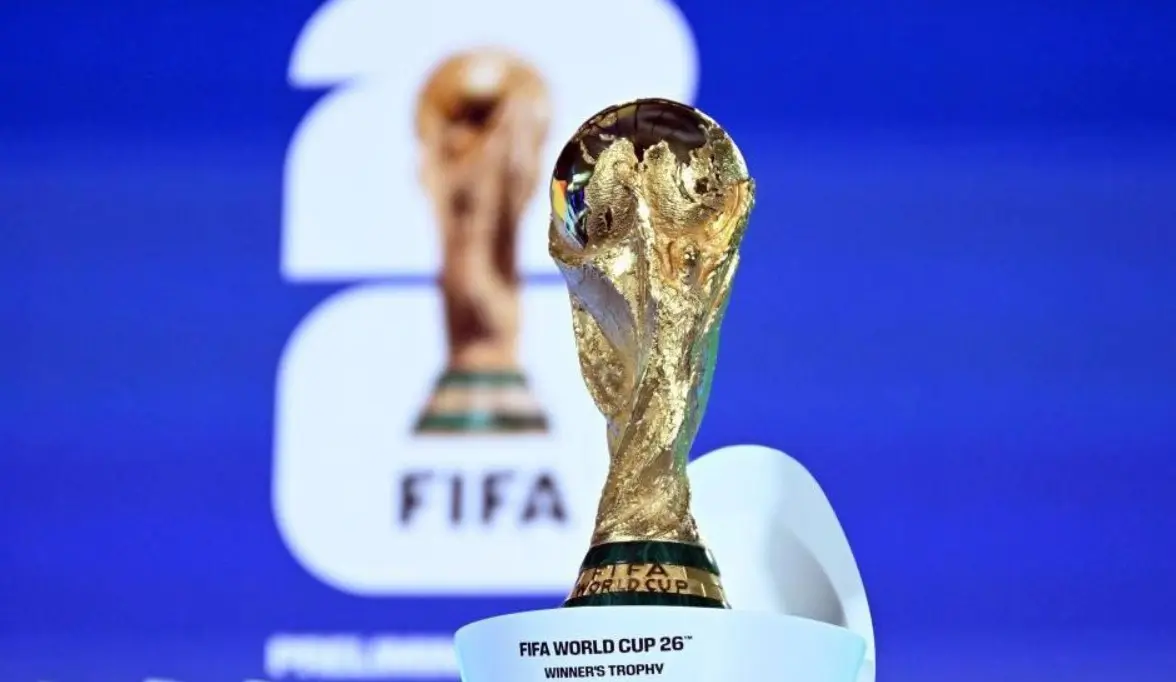
It is worth remembering that the 2026 FIFA World Cup is also a historic event in itself. The championship is the first to be organized by three nations at the same time, divided between the United States, Canada and Mexico, and the first where 48 national teams participate in the playoffs instead of 32. That means 104 games spread over 39 days, compared to 64 games in Qatar in 2022. Full details of host cities, group schedules and fixtures can be found at FIFA.
For Norwegian fans, the focus is naturally on Group I, where Norway will face France, Senegal and Iraq. With Erling Braut Haaland, Alexander Sørloth and a squad that has proven solid in qualifying, the Norwegian national team has for the first time in a long time entered a World Cup with real expectations of advancing from the group stage.
Responsible Gaming and the Frameworks
While interactive platforms and prediction games can contribute to engagement and community, it is important to remember that all betting should take place within the framework that the individual defines in advance. The minimum age to participate in gambling is 18 years old. The helpline can be contacted anonymously on 800 800 40 for those who need someone to talk to about their own or others’ gambling behaviour.
A change in how fans participate
It is still too early to say what will be the lasting expression of this trend. Some elements will certainly prove to be temporary, while others will define how we follow football championships going forward. What seems certain is that the passive TV spectator is no longer the main target group for how major tournaments are communicated to Norwegian audiences.
Traditional bookmakers and affiliate sites that don’t evolve in this direction risk being overtaken by platforms that understand that engagement in 2026 is about participation, not just information. Kongebonus’s World Cup hub is one of several Norwegian examples of this shift, but probably not the last.