

Excitement is often associated with casino and sports betting – but that’s a superficial view. The same psychology works at the gym, in the stock market, and in the meeting room. If you understand the mechanics of excitement and competitiveness, you can use it consciously – as a tool for growth, not as a source of self-destruction. This article is about what unites three seemingly different people – and how this insight works in practice.
One chemistry, different arenas
Behavioral economists have long noticed that the brain of a trader during a transaction and the brain of a player at Norwegian online casinos activate the same areas – the nucleus accumbens and the prefrontal cortex. This is where the expectation of reward, risk assessment and impulsive decisions resides. An athlete experiences the same neurochemical cocktail before takeoff: adrenaline rush, narrowed focus, and the feeling that everything is at stake.
Dopamine is the protagonist of this story. It is not released at the moment of victory, but at the moment of anticipation. That is why the trader is unable to tear himself free from the graphs, the marathon runner continues to train through the pain, and the player places another bet. All three are chasing the same chemical state – they just call it something different.
Managing uncertainty as a key competence
The main thing that unites trader, athlete, and player is that they all work under incomplete information. None of them know the result in advance. Professionalism in these fields does not mean eliminating uncertainty, but acting effectively despite it.
The trader builds probability models and manages his position. The poker player calculates odds and reads the opponents. The athlete analyzes the competitor and adapts tactics along the way. All three make decisions in real time knowing that they can be wrong – and act anyway. It is precisely this ability that distinguishes a professional from an amateur.
Research shows that a high tolerance for uncertainty correlates with success in entrepreneurship, sports, and strategy games. This is not an innate trait – it is trained through repeated exposure to risk and conscious review of one’s own decisions.
Three points where psychology beats technique
At a certain level of mastery, technique ceases to be the determining factor. Top traders have similar algorithms, elite athletes have similar physical fitness, experienced bettors have a similar understanding of probabilities. The difference is created in the head.
Here are three mental traps that similarly ruin traders, athletes, and players:
- The tilt effect – the desire to immediately regain a loss, which leads to poorer decisions under emotional pressure.
- The player’s fallacy – the belief that after a series of losses, a win “must” come, even though each outcome is statistically independent.
- Self-sabotage at its peak – unconscious reduction of effort the moment the goal is near, for fear of success or its consequences.
These patterns are universal. The runner slows down one kilometer before the finish. The trader closes a profitable position prematurely. The athlete starts playing to defend the lead instead of winning. Recognizing your own trap is the first step toward stopping it from working.
Discipline as a competitive advantage
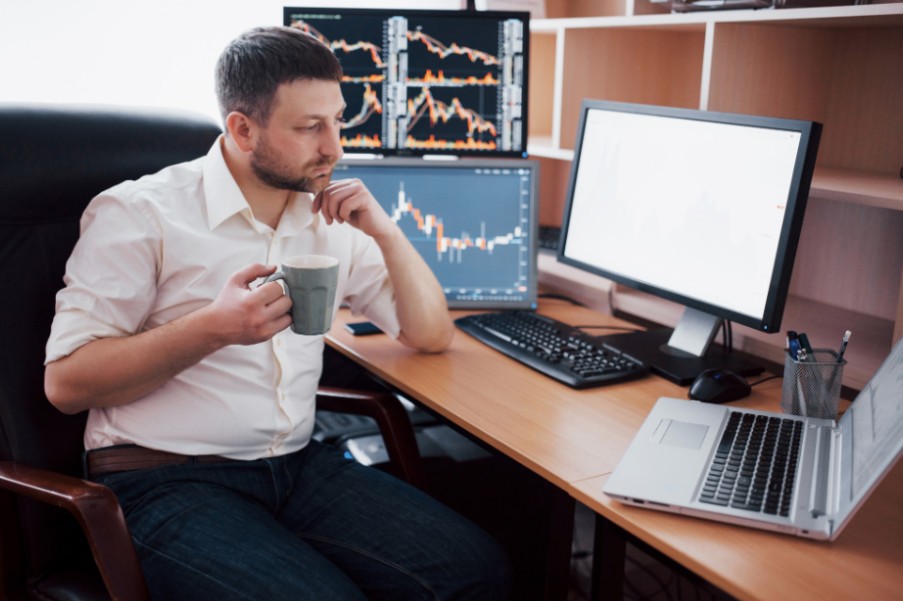
The paradox in suspenseful and competitive fields is that it is often the most boring person in the room who wins. The one who keeps a trade log. The one who sleeps eight hours before the competition. The one who leaves the table at the right time.
Here are the characteristics of disciplined professionals in each of these fields:
- Clear entry and exit rules, set in advance and not made up at the moment of decision.
- Regular review of mistakes without self-criticism – such as technical analysis, not emotional evaluation.
- Loss limits per unit of time – stop-loss for the trader, training load limit for the athlete, session budget for the player.
Self-control is not a moral quality, but a trainable resource. It depletes during the day, depends on sleep and nutrition, and requires as conscious investments as physical fitness or professional skills.
How to use these insights
Understanding the common nature of excitement, risk, and competitive instinct provides a practical advantage. If you are a trader – study the psychology of sports champions, not just financial models. If you’re an athlete – tilt-handling techniques from poker will help you keep a cool head in stressful matches.
Here are some practical steps that work in all three fields:
- Keep a decision log with a brief review after each session, match, or trading day.
- Set criteria for stop-loss and victory in advance so that you do not make decisions based on emotions in the moment.
- Keep an eye on your physical condition – fatigue and hunger directly degrade the quality of decisions under pressure.
Excitement is neither an enemy nor a vice. It is energy that drives towards results when used consciously, and towards self-destruction when it is unconscious. Trader, athlete and player are in different arenas, but play the same game. And whoever understands it first, wins.
From risk to control | The psychology behind trader, player and athlete