
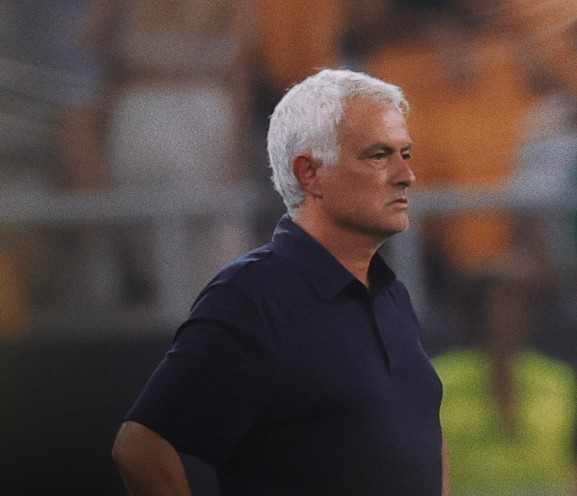
The Portuguese is aware that a lot needs to be improved, but there is one problem he is yet to acknowledge
Jose Mourinho has identified a trend that is starting to repeat itself – and has long been one of the most worrying news surrounding Real Madrid: the team creates chances to win games, but does not convert them, and then loses control after half-time. The pattern resurfaced against Elche, in a game that ended 2-3 thanks to a goal by Carlos Espí at the very end – which has breathed new life into the debate about how to manage leads.
Read: Eddie Howe has calculated that he will take over the Tottenham job
The Portuguese coach refrained from publicly criticising his players after the game. His statements were far more toned down than those of Jesús Gallego, who interpreted Mourinho’s composure as a way of holding back harsher criticism of a team that constantly lets win-win games slip.
José Mourinho encounters the same problem again
Real Madrid have followed a similar script in their last four games. They lost 1-0 to Betis, won 2-1 against Inter, crushed Rayo Vallecano 4-1 and narrowly beat Elche 2-3. However, in all the games, there were phases where they could have controlled the result better and reduced the opponent’s chance of coming back.
The Elche game was the most recent. Madrid led 0-2 before the 33rd minute, but allowed their opponent to equalise in the second half. Carlos Espí had to step up in injury time and score 2-3 to prevent his team from losing two points after a clear lead.
Against Betis, something different happened on the scoreboard, but with the same underlying reason. José Mourinho’s team had many chances and dominated much of the game, but were unable to convert the opportunities and eventually lost 1-0. The coach himself argued afterwards that Madrid had created enough offensive play to achieve a different result.
Mbappé and Vinícius don’t work
Real Madrid must keep up the pace throughout the match
The problem is not just about finishing. Jesús Gallego also pointed to the loss of intensity after half-time and the reactions from the bench. Against Elche, the opponent reduced the deficit to 2-1 in the 71st minute, equalised in the 83rd and forced Madrid to once again chase a game they had been in complete control of with a two-goal lead.
Mourinho had previously admitted a similar situation after the 4-1 win against Rayo Vallecano, explaining that the team’s physical level dropped in the second half. The difference was that the lead built up in the first half at the time meant that Madrid avoided a nervous finish.
For Real Madrid, the next step involves addressing both sides of the problem: converting more chances and maintaining control when they are leading. If they fail to do that, the door will still be open for the opponent at every turn.
The upcoming challenge raises the bar. José Mourinho’s side will face Atlético de Madrid in the city derby – a game where a second half like the one against Elche could have greater consequences. Madrid go in with positive results, but need their dominance to extend beyond the first 45 minutes.
Real Madrid’s plan for Manchester United’s generational talent JJ Gabriel