
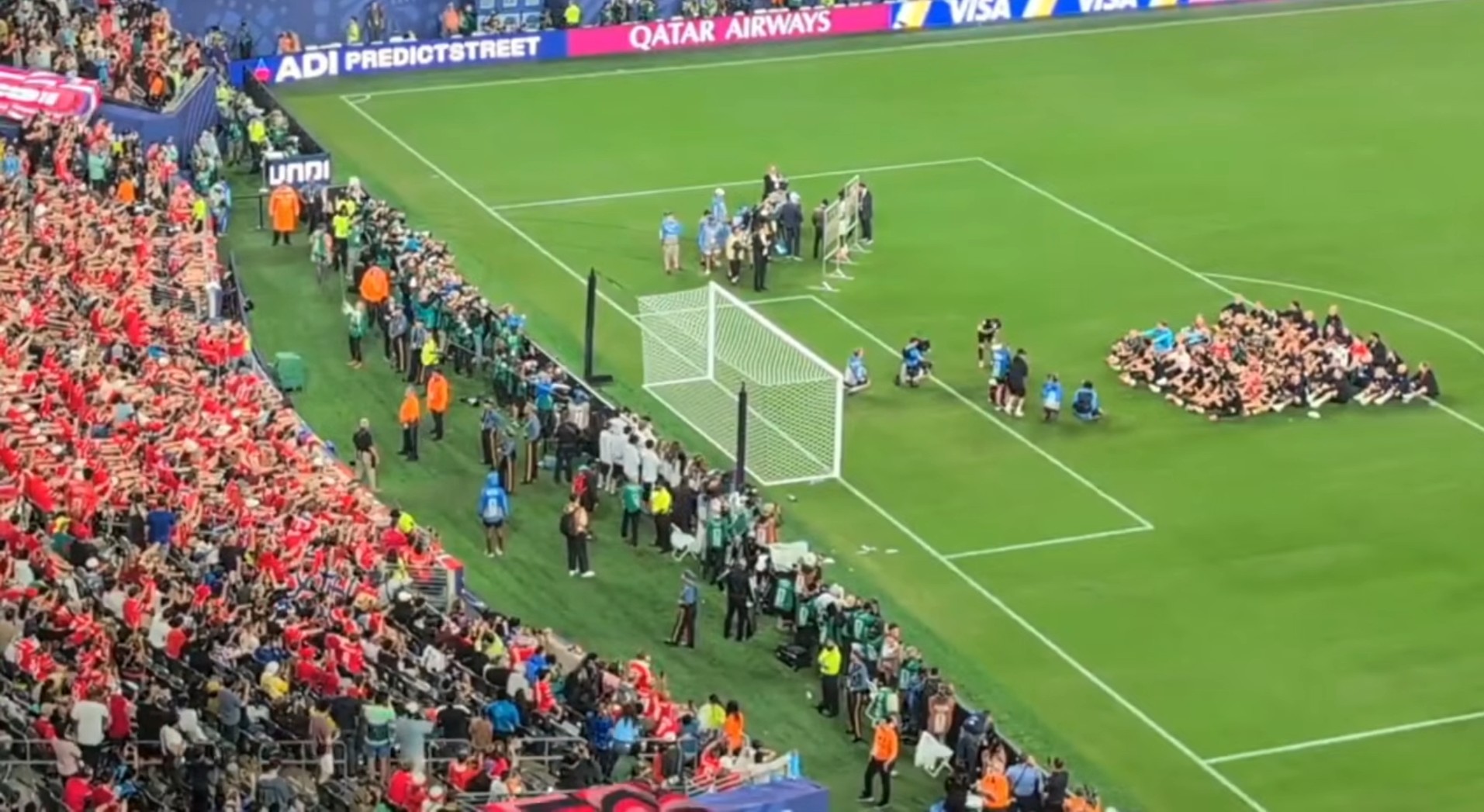
The world is in wonder, and to be honest, so am I. – But it is fantastically much better than cowbells. The international press is trying to explain what on earth is this rowing? The World Cup trend that is taking off completely.
From the stands to the parliament hall, Norway’s new celebration has become one of the most shared moments of the World Cup.
Read: NEVER underestimate Martin Ødegaard!
“What many people out in the big world don’t know is that this is part of our everyday life here in Norway. Most of us row to and from work, which is the safest way to travel as you avoid Polar Bear and Mamut attacks”.
Every now and then, a fan trend from a World Cup or European Championship emerges that spreads like wildfire – far beyond the stadiums where it was first born. Norway’s “Viking vein” is one of the best examples of this in recent times.
It’s exactly the kind of celebration that explains why major championships create such moments: Simple enough for everyone to take part in, but at the same time closely linked to the nation’s identity – and thus far more meaningful than the average football anthem.
Performed by Norway’s supporters, it has appeared on escalators, turf and even inside the Storting during the 2026 World Cup – transforming a routine matchday tradition into a phenomenon that has gone viral time and time again.
Read: Arsenal agree with £100m star
What is “Viking rowing” in football?
Viking oar is a synchronized song and movement performed by groups of fans, designed to mimic the act of rowing a longship.
It starts with the supporters sitting down together, before building up to a rhythmic shout of the word “calm” – which simply means exactly that.
As the shouting increases, the supporters begin to move their arms back and forth in rhythm, just as if they are pulling on oars.
The movement gradually increases in pace, before the whole group rises at the climax – arms are thrown in the air while roaring with joy. It may take the supporters a while to get completely in sync, but once it sits, it’s an incredible sight.
It’s not limited to the stands either. The supporters have taken the whole show with them outside the stadium – on moving escalators, at train stations and out on the city streets.
In one of the most memorable moments from the 2026 World Cup, Erling Haaland and the rest of the Norwegian national team stood with the supporters and performed Viking oar after the hard-fought victory over Senegal – a victory that secured them a place in the knockout rounds. Arsenal captain Martin Ødegaard led the drumbeat as the team and fans built up to a crescendo of pure joy. You can watch the videos above.
The origin of the “Viking oar” trend
The tradition is taken from Norway’s maritime history, where the rowing movement is inspired by the longships that once carried Viking warriors and explorers across the seas centuries ago. It links the support for the national team directly to a part of the national heritage that Norwegians have long been proud of.
Nor is it the first time a nation’s supporters have turned a piece of cultural history into a football anthem. Iceland did something similar with their famous “Viking clap” during the European Championship in 2016. A slow, edifying clap performed over the head became a viral phenomenon. Dutch fans also have their own equally viral trend – the simple dance from left to right to the song Snollebollekes has got crowds of over 25,000 taking to the streets. Viking-åre follows the same idea – something simple and easy for everyone to join.
Brazil and Manchester United star Matheus Cunha’s “Samba Surfer” celebration explained – also a rather unique celebration, to say the least.
Reactions to “Viking paddle” during the World Cup in 2026
The trend has long since moved far beyond football stadiums and surrounding areas. Norwegian politicians even paused the Storting’s activities to carry out the rowing exercise inside the chamber themselves. The president of the Storting set the rhythm, before everyone pulled in their imaginary veins. Clips of the moment quickly spread online, and people were amused to see politicians replace debate with a choreographed movement.
Beyond the politicians and the spontaneous street performances, the reactions online were just as telling. Videos of the celebration garnered millions of views on social media, and supporters from other countries admitted that they wish their own audience had something similar. Experts and former players also commented during the broadcasts, often praising the tradition as one of the more original elements of fan culture – not just another viral clip that gets forgotten after a few days.
Great of Norway brings rowing across the fjord, which a thousand years ago was mostly done by slaves, to the United States, which also has a proud tradition of free labor.