
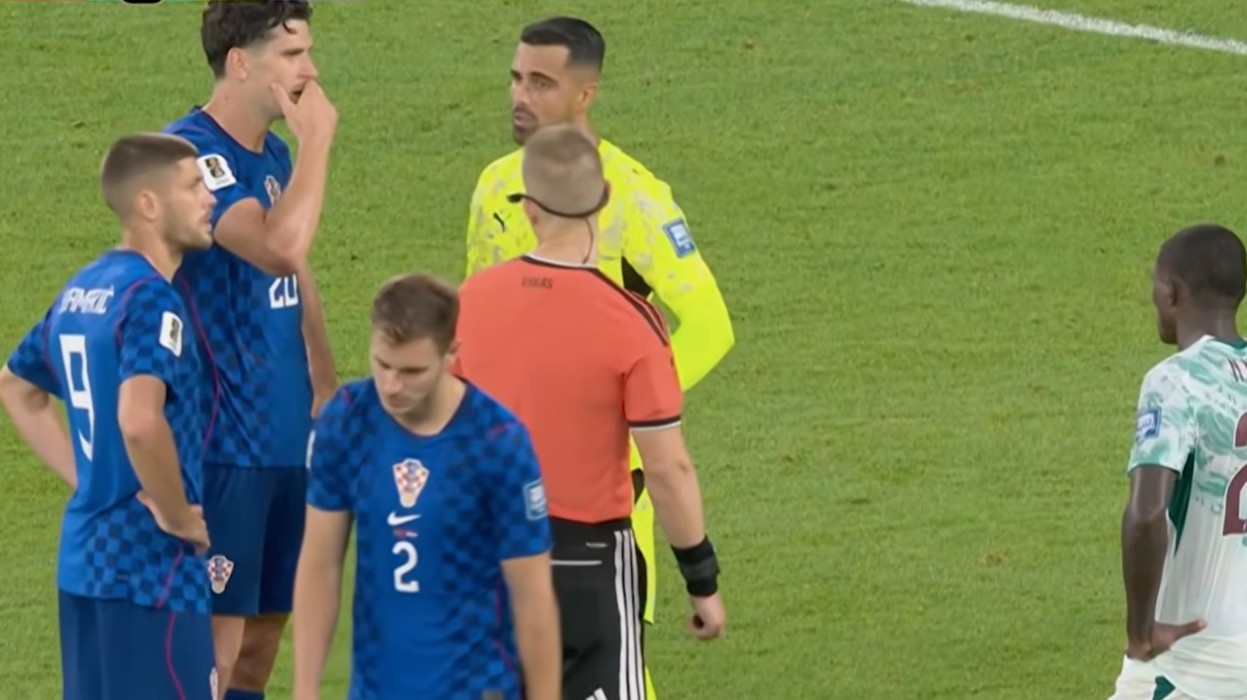
Croatia was inches away from making World Cup history – but then technology intervened. What happened in the closing minutes against Portugal will be remembered for a long time, and the reason is as bizarre as it is controversial.
Luka Modrić and his Croatian warriors lost 2-1 to Cristiano Ronaldo’s Portugal in one of the most dramatic matches of this World Cup. The effort? A place in the round of eight.
Read: Virgil van Dijk could be on his way out of Liverpool days after World Cup exit
Croatia took the lead already in the 53rd minute through Ivan Perišić, and were the leading team for much of the game. Then everything turned around.
First, Ronaldo was sent off for a narrow offside in what looked like a Portuguese goal – and minutes later, Portugal were awarded a penalty after a tackle on Renato Veiga. Ronaldo, 40 years old, took the ball and put it safely into the goal. It was the first time in his 20-year World Cup career that he scored in a knockout game. The penalty was 1-1, and history was about to be written.
But it wasn’t over.
Ramos became a hero – Gvardiol would be the savior
Ronaldo was later substituted to the amazement of the crowd – and booing coach Roberto Martinez. In came Gonçalo Ramos. And in the 94th minute, he scored what would turn out to be the winning goal. 2-1 to Portugal.
Croatia refused to give up. In the 103rd minute, Joško Gvardiol thought he had saved his team. An elegant finish in the box past Diogo Costa – and the cheers broke out.
But the jubilation did not last long.
The Inside the Ball Sensor Revealed the Impossible
The goal was annulled for offside. The reason? Two Croatian players in the build-up: Igor Matanović and Mario Pašalić.
When the cross came, it looked like Matanović missed the header. The ball instead hit Portugal’s Veiga, bounced on to Pašalić – who hit it across the goal to Gvardiol, who put it into the goal.
But: If Matanović had actually touched the ball with an involuntary flick, Pašalić was offside the moment he brought the ball down.
And here comes the bizarre part.
Norwegian referee Espen Eskas was called to the VAR screen to assess the situation. Neither angle clearly showed whether Matanović had touched the ball. But the decision was still offside – and the explanation is as surprising as it is technological:
The ball has a built-in sensor that detects even the smallest touches.
The examiner confirmed that Matanović barely snatched the ball – and thus Pašalić was offside.
Fans rage – and ask one question
On the internet, the reactions flooded:
- “I have yet to see a single angle where it is clear that he touched the ball!” wrote one frustrated supporter.
- “If the examiner actually exists – why was the judge called to the screen at all?” asked another.
The last question may have an answer: Eskas was also asked to assess whether Portugal’s Veiga was deliberately trying to play the ball when it bounced off him. If he had done that, offside would not have been ruled anyway. The referee concluded that this was not the case – and the goal was disallowed.
A decision that will characterize the World Cup for a long time
The incident is sure to be a hot topic of debate for a long time to come. Technology did its part – but the question of football’s soul and flow remains. Was that right? Was it fair? Croatia feels robbed of a legendary equaliser. Portugal advances – but victory will always have a small, invisible flicker of controversy about it.
FIFA is expected to issue a more detailed statement later. But for Croatia – and for millions of fans – the damage has already been done.